August 13, 2026
How to Prepare to Bring a New Dog Home
Before bringing a dog home, dog-proof your space, buy core supplies (crate, food, bowls, leash, ID tag), pick a vet, agree on house rules with everyone in the household, and set aside time — ideally at least a few days — to help the dog settle in without a packed schedule. Preparation matters just as much for adult dogs and rescues as it does for puppies.
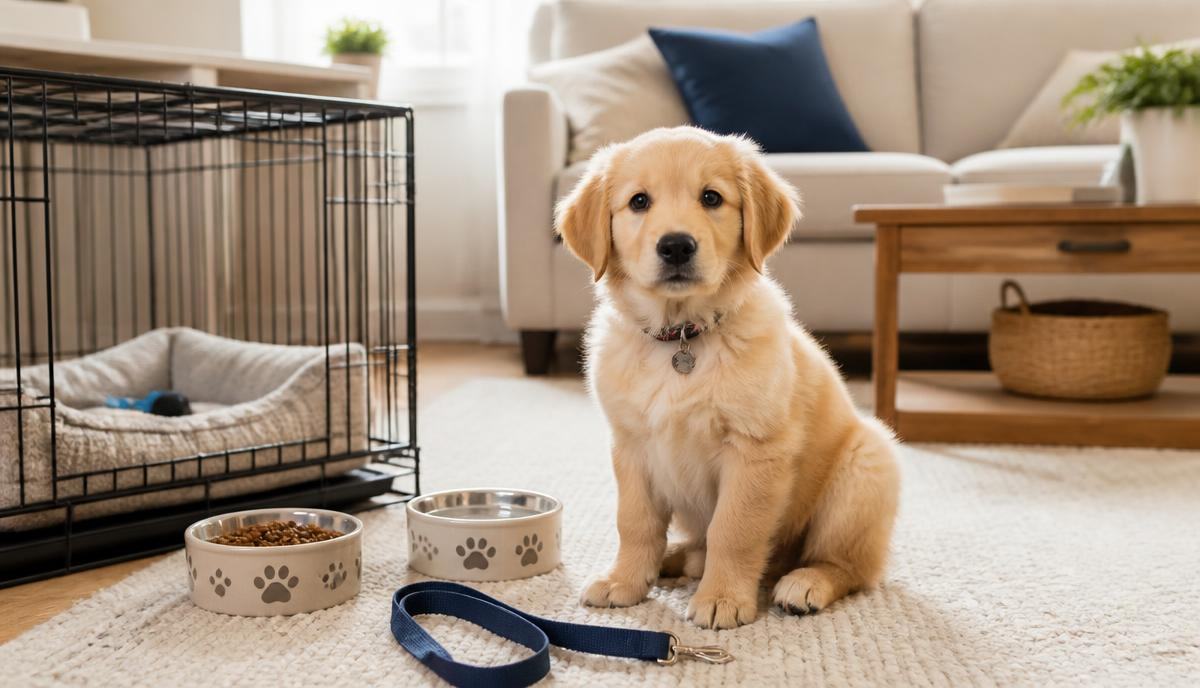
Before bringing a dog home, dog-proof your space, buy core supplies (crate, food, bowls, leash, ID tag), pick a vet, agree on house rules with everyone in the household, and set aside time — ideally at least a few days — to help the dog settle in without a packed schedule. Preparation matters just as much for adult dogs and rescues as it does for puppies.
You've found the right dog. The exciting part is done — now comes the part that actually determines how smoothly the first few weeks go: getting ready before they walk through the door.
A dog arriving into a prepared home settles in faster, has fewer accidents and fewer scares, and gives you a much clearer read on their real personality once the initial adjustment period passes. Here's what to sort out before pickup day, and what to expect once they're home.
1. Dog-proof your home before they arrive
Dogs, especially puppies and newly adopted rescues, explore with their mouths and noses first. Walk through your home at dog height and look for anything they could chew, swallow, or knock over.
- Move houseplants that are toxic to dogs (lilies, sago palm, and aloe vera are common offenders) out of reach.
- Secure trailing cables, blind cords, and anything electrical.
- Store medications, cleaning products, and anything toxic in closed cabinets, not just on high shelves.
- Put away shoes, small objects, and anything with a strong food smell.
- Check your yard for gaps in fencing, toxic plants, and anywhere a dog could dig out or squeeze through.
Do this room by room a day or two before arrival, not the morning of — it's easy to miss things when you're rushing.
2. Get the core supplies sorted in advance
You don't need everything on day one, but a few essentials should be ready before the dog is:
- Food — ideally the same food they've been eating, to avoid stomach upset from a sudden switch. Ask the breeder, shelter, or rescue what they've been fed.
- Bowls for food and water.
- A crate or bed, sized appropriately, as a safe space that's theirs alone.
- A collar, leash, and ID tag with your contact details, plus a plan for microchipping if it's not already done.
- Basic grooming tools suited to their coat type.
- A few sturdy toys and chews, since chewing is a normal (and important) behavior, especially for puppies and adolescents.
Buying these in advance means you're not scrambling to a pet store on the first chaotic day.
3. Line up a vet before you need one
Book a vet — or at least research options and confirm you can get an appointment — before the dog arrives, not after something goes wrong. A first checkup within the initial week is standard practice, partly to establish a baseline for their health and partly to review vaccination and parasite prevention schedules. If you're adopting, ask the shelter or rescue what records they already have so you're not duplicating recent vaccinations.
4. Agree on house rules as a household before day one
Dogs learn fastest when rules are consistent, so this conversation is worth having before they arrive, not after confusion sets in. Sit down with everyone in the household and agree on things like:
- Is the dog allowed on furniture or in bedrooms?
- Where will they eat, sleep, and go to the bathroom?
- Who's handling walks, feeding, and training on which days?
- What commands or cues will you use, so everyone's consistent?
A dog getting mixed signals from different people in the first few weeks takes longer to settle and longer to train.
5. Clear your schedule for the first few days
Try to avoid bringing a dog home right before a demanding work week or a big life event. Give yourself at least a few quiet days — ideally closer to a week — to help them adjust without a packed schedule pulling you away. This matters for puppies and adult rescues alike; a dog with an unfamiliar history often needs just as much settling-in time as a young puppy, sometimes more. Keep the first few days low-key: quiet introductions to family members and other pets, short supervised time in the yard, and no big outings or parties. Let them decompress before you build up their world.
6. Prepare for the adjustment period, not just the first day
Even a well-prepared home doesn't guarantee an instant, smooth fit. Many rescue organizations describe a '3-3-3 rule' as a rough guide for adopted dogs: roughly the first 3 days can involve overwhelm and shutting down, the following 3 weeks are typically when routines and trust start forming, and by around 3 months many dogs are settled into their new normal. It's a general pattern, not a guarantee — but it's a useful reminder that a nervous, standoffish, or overly clingy dog in week one isn't necessarily how they'll be long-term.
FAQ: Preparing for a new dog
What supplies do I need before bringing a dog home?
At minimum: food, food and water bowls, a crate or bed, a collar and leash, an ID tag, and a few toys or chews. Grooming tools and a vet appointment should also be arranged in advance.
How long does it take a new dog to settle in?
Many rescue organizations use a rough '3-3-3' guide: about 3 days to begin decompressing, 3 weeks to start settling into a routine, and around 3 months to feel fully at home. Actual timelines vary by dog.
Should I take time off work for a new dog?
It helps. A few quiet days at home — ideally closer to a week — gives a new dog time to adjust without being left alone before they've settled in.
Do rescue dogs need the same preparation as puppies?
Yes, and often more. Rescue dogs may arrive with an unknown history, so a calm, predictable environment and patience during the adjustment period matter just as much as physical supplies.
Should I switch a new dog's food right away?
No. Keep them on their previous food for the first week or two and transition gradually if you plan to switch, to avoid digestive upset.
The bottom line
Bringing a dog home goes more smoothly when the groundwork is done first: a dog-proofed space, the right supplies, a vet lined up, household rules everyone agrees on, and a calm stretch of time to let them settle. None of it guarantees a perfectly smooth first week — but it removes most of the avoidable stress, for both of you.
Haven't found your match yet? Take the 2-minute quiz to find a breed that fits your life, then come back here when it's time to get ready.
Still deciding on a breed? Our guide to choosing the right dog , Labrador Retriever spotlight, and Greyhound spotlight are good places to start.
Guidance only — every dog is an individual. Always meet a dog, talk to reputable breeders or rescues, and consider adoption first.